Comprehensive Dental Care Clinique, led by Dr. Pooja Shah (MDS Prosthodontics), with a team of dental specialists.
26/27, Labh Niwas, Khetwadi 4th Lane, Off SVP Road, Near Alankar Cinema, Girgaon, Mumbai 400004

Smile Brighter, Live Better: Experience Our Comprehensive Care

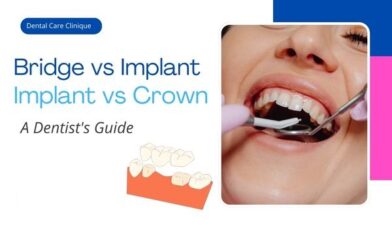
A crown is a cover or "cap" for a tooth to restore it to its standard shape and size, thus strengthening and improving the appearance of a tooth. Prosthetic crowns are made of metal, porcelain fused to metal substrates, or new all-white restorative materials.

When a tooth is generally broken down, crowns are necessary, and fillings won’t solve the problem. If a tooth is cracked, a crown holds the tooth together to seal the cracks so the damage doesn’t worsen. Crowns are also used to support a large filling when there isn’t enough of the tooth remaining, attach a bridge, protect weak teeth from fracturing, restore fractured teeth, cover poorly shaped or discoloured teeth or protect a root-canal-filled tooth with compromised strength.
The tooth is numbed and prepared for the crown by removing decay or weakened areas. After the tooth is prepared, an impression of teeth and gums is made and sent to our lab for the crown fabrication. The dentist cements the permanent crown onto the tooth on the next visit. Some adjustments may be required to get the right fit so the crown will feel
comfortable in the mouth and conform to the bite. If you have a specific cosmetic look in mind for your crown, discuss it with our dentist at your initial visit. When the procedure is complete, your teeth will not only be stronger, but they may also look better.

Crowns should last approximately 5-8 years. However, with good oral hygiene and supervision, most crowns will last for a much more extended period. Some damaging habits like grinding your teeth, chewing ice, or biting your fingernails may cause this period to decrease significantly. Avoid chewing hard food. You also want to avoid teeth grinding. Besides visiting your dentist and brushing twice daily, cleaning between your teeth is vital with crowns.
Regularly scheduled examinations and hygiene appointments must be adhered to, or the same bacterial assault which causes decay and makes dental care necessary may cause the restorations to fail.
A bridge is a dental appliance that replaces one or more natural missing teeth, thereby “bridging” the space between two teeth. Bridges are cemented into place on the “abutment” teeth–the surrounding teeth on either side of the space or span. Unlike removable partial dentures, the patient cannot remove bridges from the mouth. A bridge is a device that typically consists of three units-a pontic (a false tooth) fused between two crowns that are cemented onto the abutment teeth.
They fill the space in the mouth left by missing teeth. They not only correct an altered bite and improve chewing ability and speech, but they also safeguard the appearance by preventing facial features’ collapse, which can cause premature wrinkles and age lines.
If the space between the tooth is left unfilled, this space can cause the surrounding teeth to drift out of position and cause teeth and gums to become more susceptible to tooth decay and gum disease, which can cause further tooth loss.
For a traditional fixed bridge, the first appointment involves the dentist reducing the adjacent abutment teeth that will be anchors. Impressions are made, from which a metal framework, including the pontic, is created. By the second appointment, the final bridge is fitted over the teeth. The total treatment time is usually around one week, depending on the type of bridge. However, because it is often difficult to match the natural shade of your teeth, the treatment time may be longer.
To provide optimum longevity for your restorations, prevent future decay, and support tissue breakdown. Brush after eating and before bedtime around the bridge with a soft toothbrush, and floss at least once to twice a day. You must clean "under" and around the bridge on a bridge. If you do not control the buildup of food debris and plaque, your teeth and gums can become infected. Fluoride rinse is to be used before bed. Swish the fluoride rinse vigorously in your mouth for at least one minute. Visit our clinic during regular six-month examination periods for advice and an examination of your bridge.
There are three basic types of materials for dental crowns
1. Porcelain fused to metal (PFM) dental crowns
2. All-porcelain dental crowns
3. All metal dental crowns (Gold)
1. Avoid chewing on or eating hard foods on the restorations for 24 hours from the time they were cemented
2. To help with discomfort or swelling, rinse your mouth three times a day with warm salt water. (1tsp. of salt in 8oz of water)
3. Keep the crown area clean to maintain tissue compatibility (the contour of the prosthesis must allow the surrounding tissue to conform to a natural, healthy position)
4. Certain patients may experience some sensitivity in teeth. This sensitivity will disappear gradually over a few days to weeks.
Dental crowns require regular and consistent home and professional dental care as your natural teeth to prevent decay at the tooth-dental crown junction. To provide optimum longevity for your restorations, please follow the home care tips below:
Professional Doctors
Years of Experience
Appointments are recommended. Call +91 77150 69919 or send us a message to book a time.
Monday - Tuesday:9 AM - 1 PM, 4 PM - 7 PM
Wednesday - Thursday:9 AM - 1 PM, 4 PM - 7 PM
Friday:9 AM - 1 PM, 4 PM - 7 PM
Saturday:9 AM - 1 PM, 4 PM - 7 PM
Sunday:Closed